
HRV / ERV & Air Quality
Fresh air in, stale air out, without throwing away the heat you paid for. We install HRVs and ERVs in simplified, partially dedicated or fully dedicated setups, plus ultra UV air purification. One contractor for the whole job: HVAC installs for homes, and custom galvanized steel fabrication for other contractors.
A Tight House Needs to Breathe
Newer homes and renovated older homes are built tight to keep heat in. That is good for the gas bill, but it also keeps cooking smells, moisture, dust and stale air in. Opening a window in January is not a real answer.
A heat recovery ventilator, or HRV, brings fresh outdoor air in and sends stale indoor air out at the same time. Inside the unit the two air streams pass each other through a core, so the outgoing air warms the incoming air in winter. You get fresh air without losing most of the heat.
An energy recovery ventilator, or ERV, does the same thing and also moves some moisture between the two streams. That helps keep indoor humidity steadier, which matters in a region with humid summers like Windsor and Essex County.
Signs your home needs better ventilation
- Condensation or frost on the inside of windows in winter
- Musty smells in the basement or bedrooms
- Cooking smells that hang around for hours
- Stuffy air, especially with the windows closed
- A new build or major renovation where ventilation is part of the plan
Three Ways to Connect
Simplified
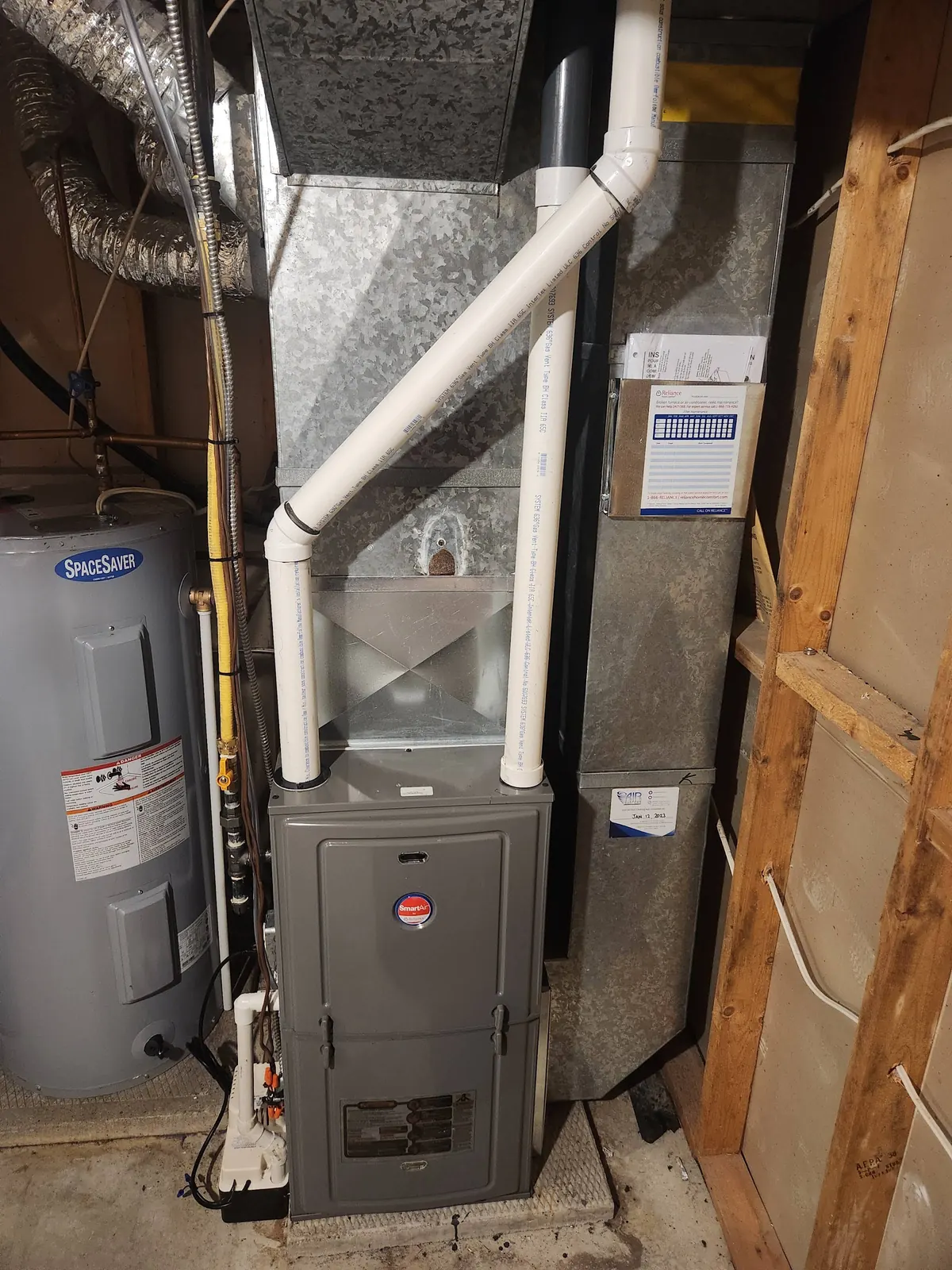
The HRV or ERV connects to the furnace ductwork and uses it to move fresh air through the house.
- Plus
- Least new ductwork, so it suits most existing homes.
- Watch for
- Works best with the furnace fan running when the unit runs.
Partially dedicated
Stale air is pulled from bathrooms and the kitchen with its own ducts. Fresh air goes in through the furnace ducts.
- Plus
- Takes moisture and smells right from where they start.
- Watch for
- More duct runs to plan through walls and ceilings.
Fully dedicated
The system has its own supply and exhaust ducts, separate from the furnace.
- Plus
- Works on its own, even in homes without forced air.
- Watch for
- The most ductwork, so best planned during a build or gut renovation.
Some conditions apply. The right setup depends on your home, your existing ducts and the work being done. We confirm it at the visit.
Ultra UV Air Purification
A UV light installed inside the ductwork or near the indoor coil shines on the air and surfaces as the system runs. It is used to help control mould and bacteria growth on the coil and in the air moving through the system.
UV purification works alongside a good filter, not in place of one. It can be added to a new HRV, ERV, furnace or AC install, or fitted to an existing system.
- Bathroom and kitchen exhaust vents run outside, not into the attic
- Dryer vents sealed and sent out the shortest path
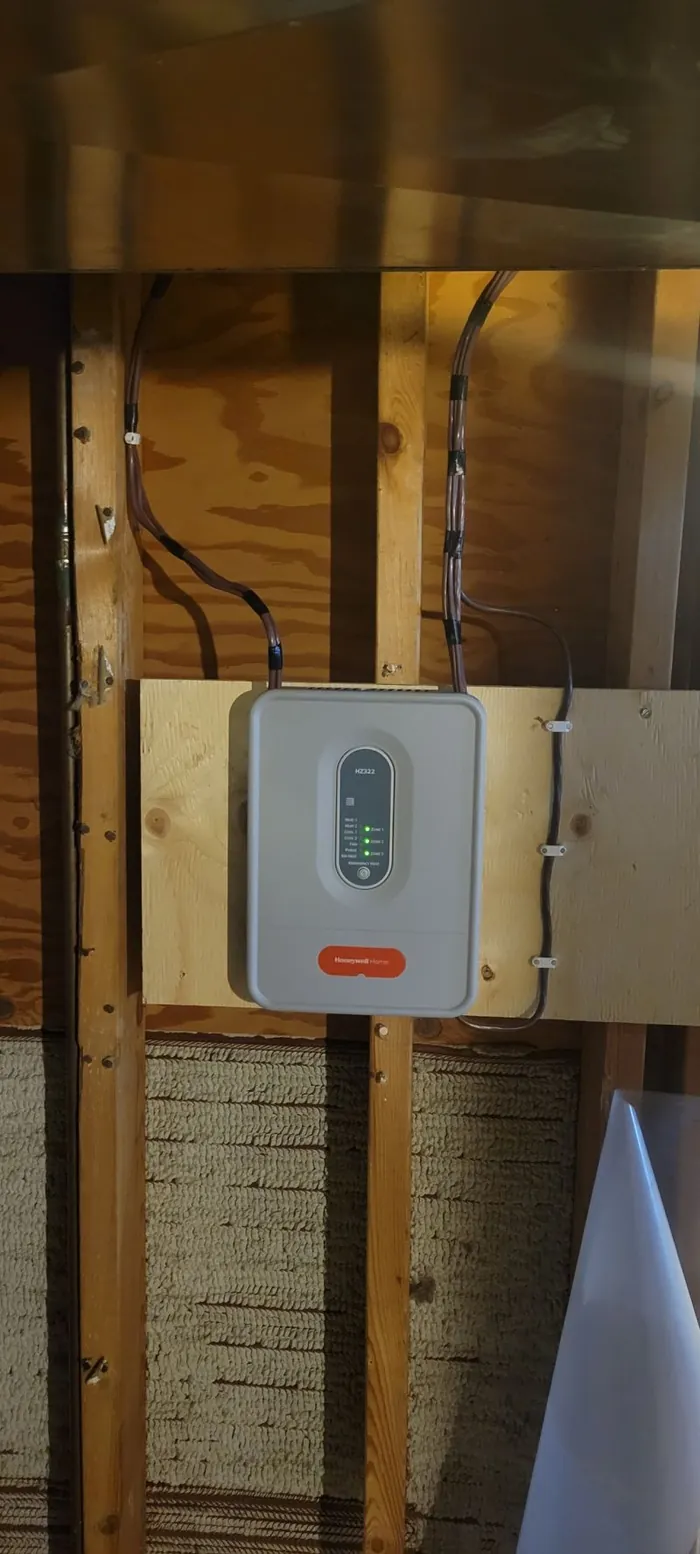
- Zone control so each floor gets the air it needs
- Custom duct pieces built in our shop when the standard parts do not fit
See Gas Lines & Venting for more on venting work.
How We Install an HRV or ERV
Call
Tell us about the problem: moisture, smells, stuffy rooms, or a build that needs ventilation.
Home visit
We look at the furnace and ducts, the rooms that need exhaust, and where the outside hoods can go.
Written quote
The quote shows the unit, the install type, the duct runs, the wall hoods and the controls.
Install
The unit is hung, ducts are run and sealed, hoods are cut in and the airflow is balanced so fresh air in matches stale air out.
Cleanup
We clean the work area and show you the controls and how to clean the core and filters.
What Drives the Cost
HRV or ERV
An ERV usually costs more than an HRV of the same size.
Install type
Simplified uses the most existing ductwork. Fully dedicated needs the most new duct.
Access
Open basements are quick. Finished ceilings and walls take longer to run ducts through.
Add ons
UV purification, better filters and wall controls all change the total.
We do not post prices. You get a written quote after the visit.
HRV and ERV Questions
What is the difference between an HRV and an ERV?
Both bring in fresh air and send out stale air while keeping most of the heat. An ERV also moves some moisture between the air streams, which helps keep humidity steadier.
Which one is right for my home?
It depends on the house and how humid it gets inside. Homes with winter window condensation often lean toward an HRV. We go through it with you at the visit.
Does an HRV replace my bathroom fans?
In a partially or fully dedicated setup it can pull air from bathrooms. In a simplified setup the bathroom fans usually stay.
How often does an HRV need cleaning?
Filters should be checked every few months and the core cleaned on a regular schedule. We can add it to a maintenance visit.
What does UV air purification do?
A UV light in the system helps control mould and bacteria on the coil and in the moving air. It works with your filter, not instead of it.
Stuffy House or Wet Windows?
Call for a home visit and a written quote on fresh air ventilation.